

The Rider Waite Smith deck consists of 78 cards including major and minor arcana. Tracing the development of the imagery shows just how significant every detail is in the artistic composition. The minor arcana features four suits of pentacles/stones, wands, swords, and cups. The suits have their own history involving various theories of spiritual iconography- a subject of criticism given their lack of empirical evidence (Hehe, 2019). The suits hence may contain pictorial ties to medieval status’ (Bernhard, 2017), the four elements, and even qualities of being (Raine, 1969, 112- 148 ). This is to say that everything visible on the face of a card can be taken into account of the tarot practice whether the creator intends it or not. When the deck was transformed into a fully illustrated deck by artist Pamela Colman Smith, it included images of the numbers and royals of each suit as well as the major arcana featuring archetypal figures or qualities. The result was a series of images that in combination could be read as a story (Oatman-Stanford, 2014).
The Rider Waite Smith deck has also been a template for many other variations of decks. From country to country the images vary according to cultural influence. Decks appeal to different drawers and interpreters personal tastes but also the tarot culture within a particular setting. Decks have branched far enough to include additional members of the major arcana such as 'Termite Swarm' and 'Mardi Gras 'from Egans Delta Enduring Tarot, to 'Sun Dance' in Magda Weck Gonzalez’ Native American Deck. Furthermore, there are countless works of art inspired by the imagery of tarot from photography such as Nicholas Bruno’s The Somnia Tarot, to Jodorowsky’s renowned The Holy Mountain. Colman Smith’s images remain a point of departure inspiring countless variations. Exploring other decks reveals the uniqueness of each and ownership of the artist. When creating one’s own deck there are so many things to consider: how close it is to you the creator and your personal life of influence, what is the intended user, what is the culture you are wishing to represent, what is appropriate to represent, as well as all the questions of the actual tools with which you are creating. For me as a creator the answers to these questions were all too foreign that the only way was to experiment.
When I first started thinking about the images I wanted to create I thought mostly of accessibility to the general public. I decided to interview peers about their folkloric influences and what images or figures appeared in their life as part of their archetypal hero’s journey. Interviewing my subjects led to the discovery that most mythological and archetypal figures may actually be in a way inaccessible in today's constraints of academia. The knowledge of what is a mythological or archetypal figure is affected by culture, education, the loss of verbal storytelling, and perhaps the inaccessible tiers of so-called “higher education” that make the study of folklore exclusive to scholars. My interviewees would think of celebrities, musicians, philosophers, or other contemporary figures that they resonated with more than a somewhat dated archetype of a high popess or hermit. Characters from sitcoms or famous musicians were more commonly listed as sympathizers to the modern human.The interviews were important for me to gain an understanding of the kind of deck I wanted to create. A recreation of the classic archetypes would perhaps be inaccessible to my immediate community. Like the many variations of Rider Waite Smith, I had to observe my present with the openness of the drawer being available to what images and figures were there. There was an instinct to peel away from the scholarly research of mythology and archetypal figures and feel the resonance within me, trust myself and that my influences will relate to others naturally.
Along with my daily drawing and reading practice, I had a daily creating process. I began to make smaller cards about as big as a matchbox to keep a visual diary of symbols, signs, or observations. This was an attempt to start thinking more symbolically and keep up a daily mark making practice within similiar guidle lines of the tarot.
The daily practice of the miniature tarot ceased once I felt the instinct to create the larger cards. The chosen material was a stack of eighty plain notecards and Staedlers pigment liner pens.
Over the course of 4 months, I began constructing my Tarot deck letting myself be drawn towards any influence over what could be a card. I let the tarot become an even more distant guide to my cards, looking at Smith's compositions only when an idea did not naturally occur to me. Some cards I finished, some I never started, but most I drew halfway to be finished at a later time. There are different styles contained within the deck and together they manifest me and context : Arthaus, Berlin, family, values, history, memory, and more. Click the card images to know more about my personal connection to them individually.
Pamela Colman Smith was a POC British artist who has only recently been accredited as the illustrator of the formerly named Rider Waite deck. Her illustrations include influence from her own background and prolific artistry (Teall)

The first card featured in the major arcana is The Fool. The major arcana for William Butler Yeats could be arranged in a wheel formation with The Fool at the center and the 22 others in a circle around. It depicted a cyclical story The Fool's journey (Weatherly, 1986, 112 - 121). This constellation of viewing the major arcana resonates with my own journey of Arthaus and in the larger spectrum of my life. The Fool was the first card which I attempted to design. Trials of drawing my interpretation of The Fool were an aesthetic failure but did result in an interesting tendency. I instinctively drew myself as the main figure. I was aware of how decks used animals or more androgenous figures to be inclusive but given the intimate nature of this project I was more drawn to use myself, a female body, representing many of the protagonist images. I still have not finished a satisfactory Fool card, perhaps fitting to my unfinished journey as an artist. But the process for drawing the fool was applied to other major arcana all featuring myself as the main figure. The composition of images is picked from my memories and transposes their meaning into an existing system with which to further reflect.
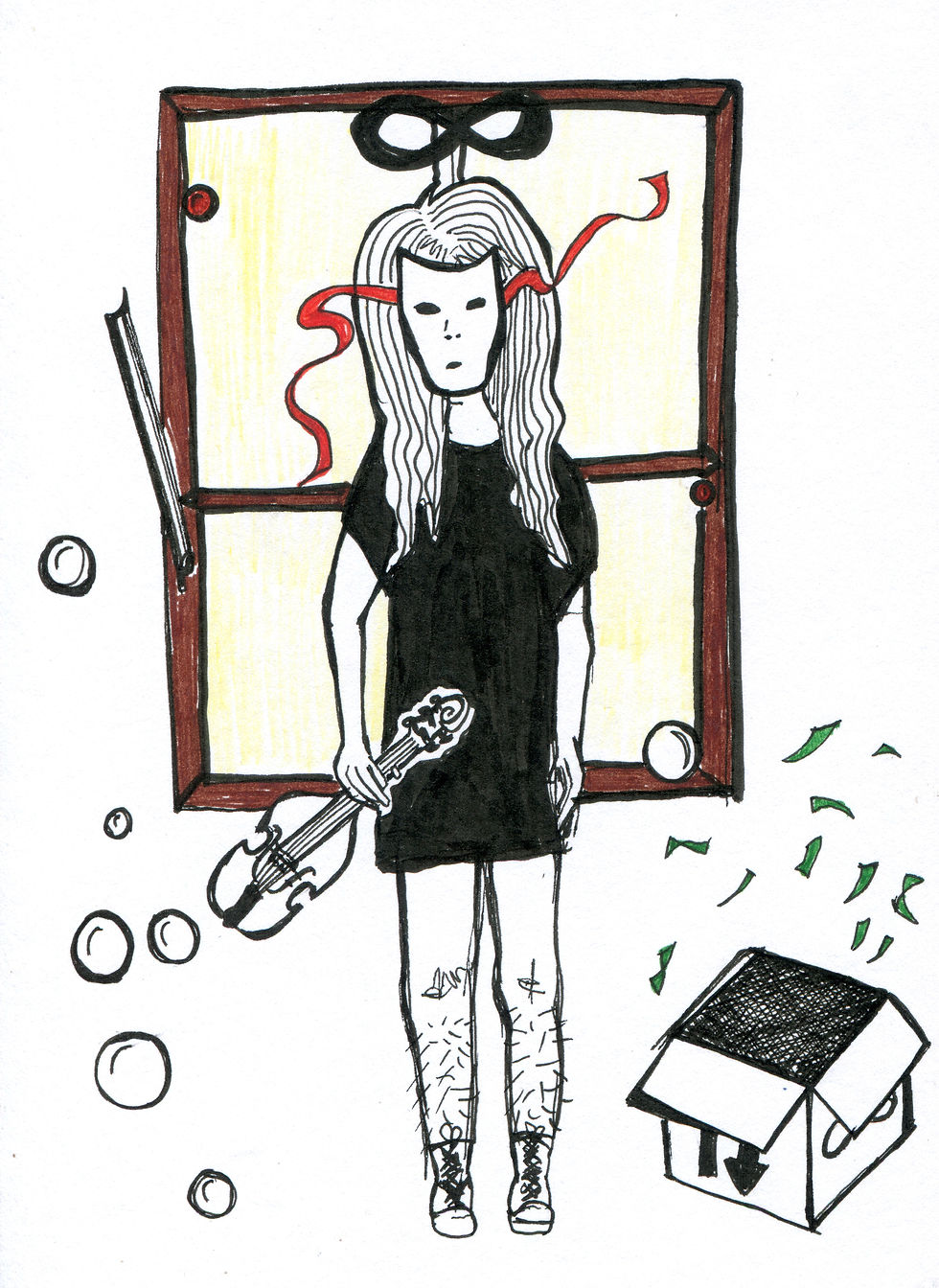
I moved to Berlin 2019. Too many desires and not much direction.

A night camping with my father in Joshua Tree California. My first solo adventure with my dad as an adult, the best sky I’ve ever seen.

In 2018 I discovered the amazing community and athleticism of Pole Fitness. I was struck by the profound courage and strength I could find in my sexuality and energies.

Being hungry at 2am. Struggling with decisions and grappling with a complicated relationship to food.

My back muscles. The first time I began to feel strong was after I became a certified yoga teacher. My body was changing and I loved it.

Memories of sitting by the pool in deep conversation
In a strange transposition, music became a key player in the cards. The music and musicians I had used to understand the cards were recycled and became cards themselves; represented as stylized portraits. The musician cards were a projection of my feeling process underpinned by admiration and perhaps dreams of the future. My brain thinks in music more so than words or pictures. When thinking of my equivalent to many of the major arcana figures, I instantly thought of musicians whom I admired for their sound but also sometimes for their journey. Despite my fascination and dedication to music, I am not a “musician” so to speak. I’ve worked with sound, played some instruments in the past, like to sing, but have never been in a band or thought of myself as a musician. In readings they can also be used to represent qualities that relate to my connection with the artist (or the drawers).

Shamelessness. my shameless taste in pop music.

Shamelessness. my shameless taste in pop music.

Quirk. Letting yourself indulge and find strength in what makes you different.

Grounding. Returning the small and simple things that consistently keep you grounded.
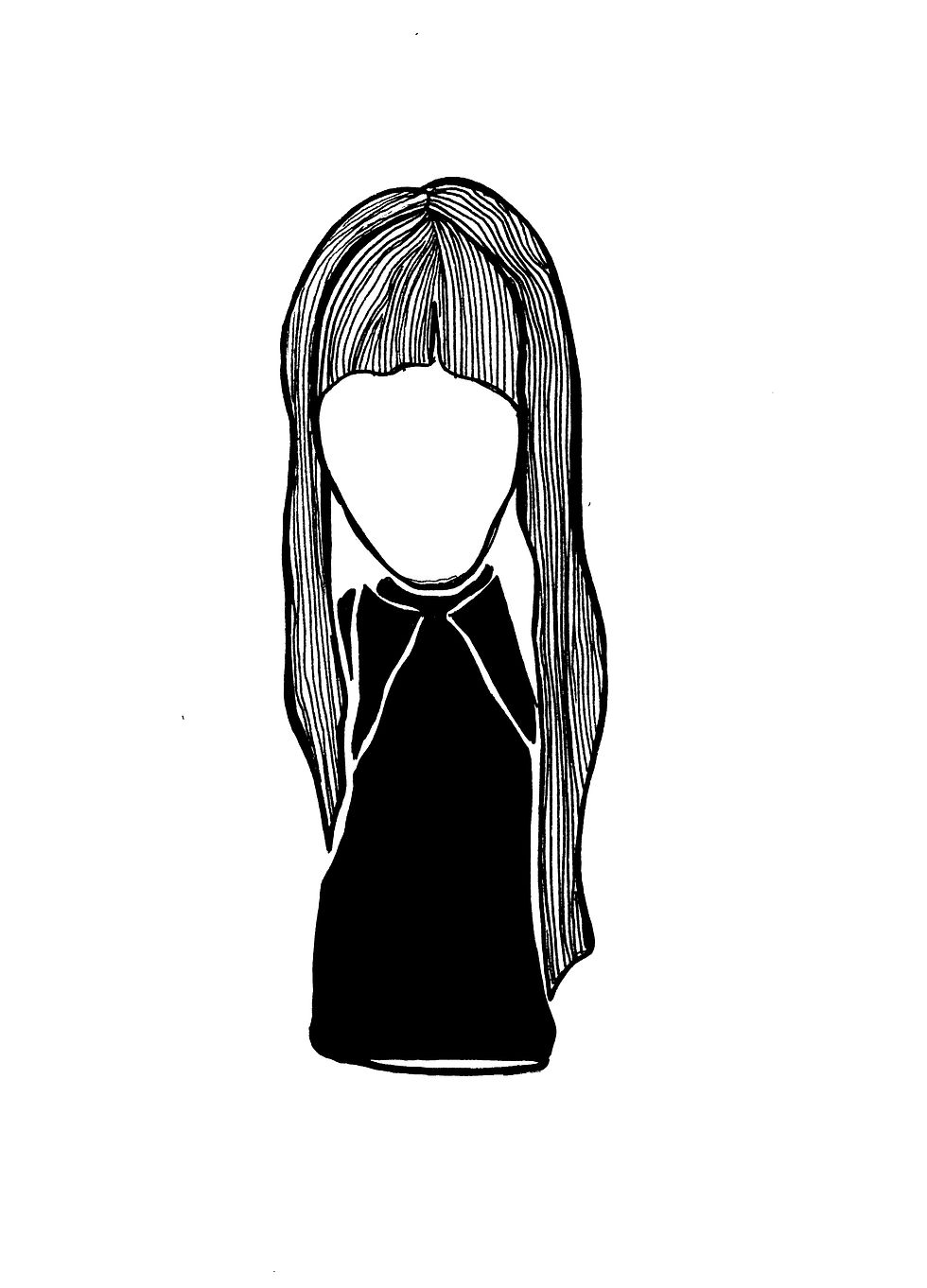
Sentimentality. Not always a waste of time.

The balance of being an asshole and genius.
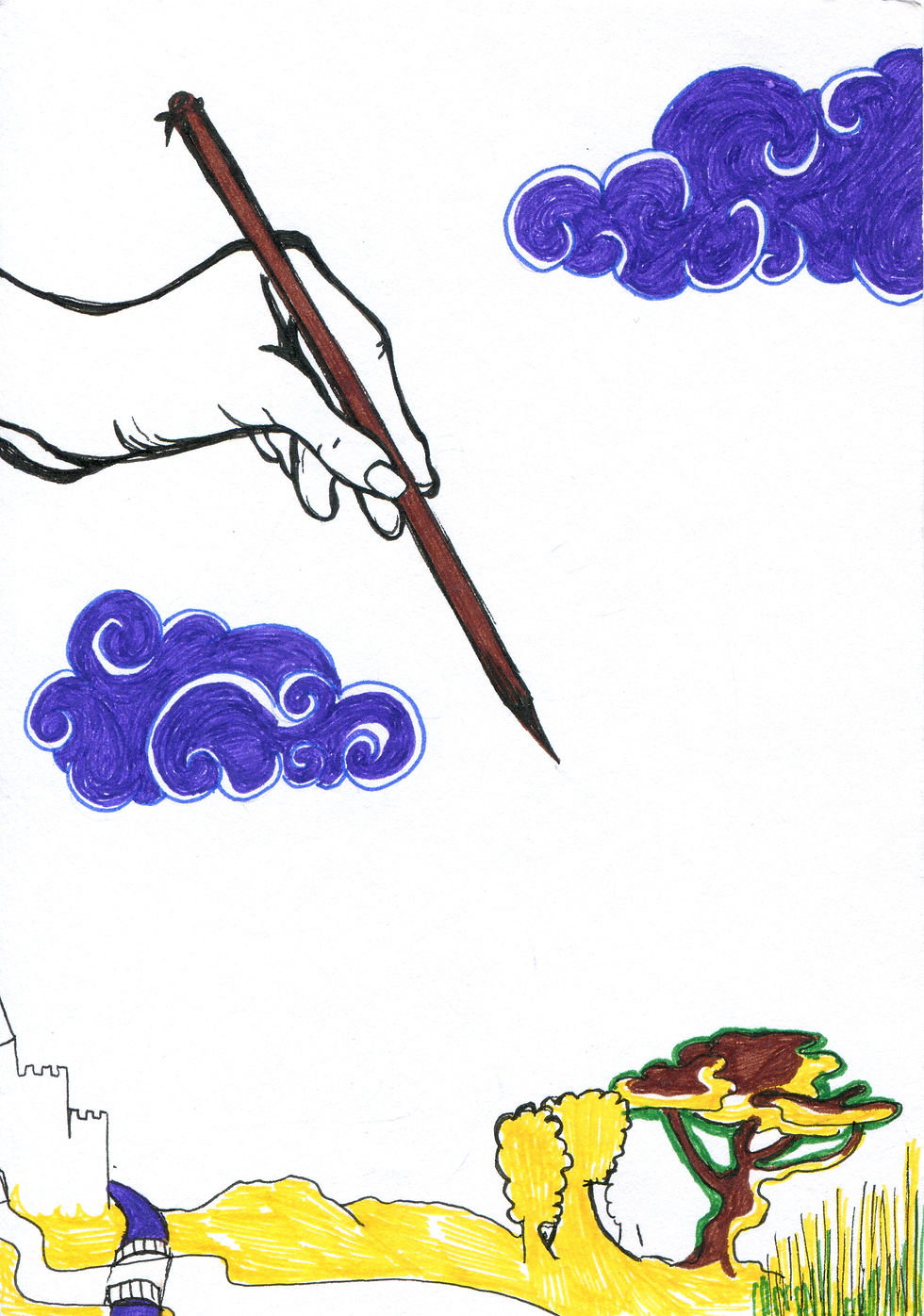
In the past year I have found my own style of visual art. I draw in pen, often without using a pencil first. I’ve been exercising how to make mistakes and turn them into something I’m satisfied with. In my Vade Mecum I show a chronicle of drawings of hands, something which I especially despise drawing given my personal distaste for my own set. But I grew to love drawing hands. I find them expressive and interesting. It was natural to feature my fascination with hands on some of the tarot cards. The cards featuring hands were often cards that corresponded with existing tarot cards. They were a way to subtly introduce my take on the existing card.

comfort can come from the smallest of things.
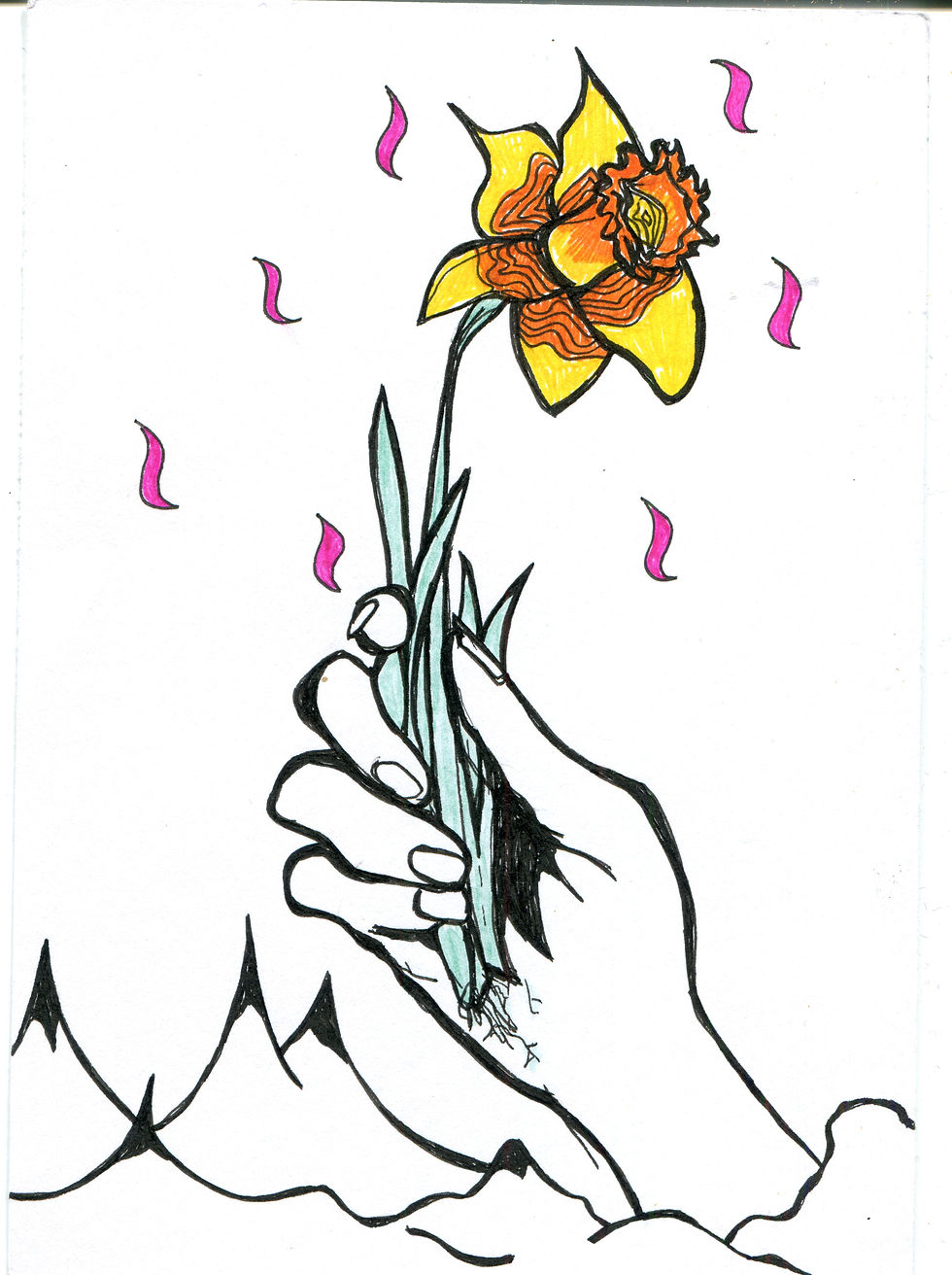
The daffodil symbolizes knowledge, one of the greatest powers.

Persimmons are seasonal fruits that promote well-being. They can be very horrible if over ripened. I first discovered them when visiting my parents in Shanghai.
During the festival process I began to transpose my feelings for being in other pieces into the cards. Cards appeared that represented my particular connection to other pieces that I was performing in at the time. By undergoing this process I was allowing myself to both be present with others while also contributing to my project and reflect on my involvement. Others in the cohort knew that I was doing this and the tarot was eventually suggested to become a running theme for the festival website. Cards that I had already created for shows were used as the poster image. This was the only time that I began to include others into my compositional planning. For shows that I had not created a card for I collaborated with the head of that show to produce a card that they felt was an adequate representation.
The styles and tastes I was able to experiment with are contained within the images, a reflexive transposition of the journey of my research. Creating the deck was in itself an embodied process and moving from creator to drawer to interpreter is a natural shift as the body is moving through a deep reflective cycle. I created over 78 images by now, and continue to draw them regularly. Together the cards are a manifestation of my own voice. It is distilled in the deck both in thought and aesthetic, open to be used by others but always remaining intimated tied to my person.

By Shai Cohen

By Sarah Kaurin Jonassen

By Ellie Brewster

by Marie Gusewell

By Juan Hurtado

By Svenja Urke