

Band Practice Devising Process
In the final week of festival performances, I presented an original piece alongside a fellow collaborator Lisa Ullrich. The piece was slightly improvised, seemingly random, playful, and to our surpise - funny. Despite its whimsical identity, Band practice was the result of a deep reflective process that balanced worlds of playfulness and pensiveness.
Lisa Ullrich was in a similar state of being stuck with the immense amount of learning and material we had created in the past two years and at a standstill for knowing what we should do with all of it. Having collaborated with Lisa prior to the festival, it was a natural decision to work together to navigate this question as the one thing we both still believed in was the power of creative collaboration. This belief met the other desire we held in a serendipitous collision: the way of emotion and feeling through music. Lisa and I had previously expressed the desire to start a band, a shared ambition since we were both young children. Furthermore, as music had found it's way into my deck it was a natural choice to use the the tarot to feed our composing process.
This was a true experimentation of the use of tarot in the creative process. It was in the magical “band” setting that I saw the sentiments of my tarot deck and entire process reflected in a playful and opportunistic way. Lisa had been experimenting with fragments of words collected in a bowl. They could be picked at random and rearranged to create text. Lisa’s bowl of words is not unlike the role of my tarot deck. At our first band practice we drew handfuls of words and created poems. Then after swapping poems one of us would begin to experiment musically inspired by the text, the other was the role of a coach or support for the improvisation. The tarot was then introduced to our band practice as we continued to play with musical composition. There were times when the tarot was used to directly listen to the musicians that we drew, inspiring us to try out new styles of music, or rather reflect upon the nature of the musician and how their story could lend itself to the one we were creating as artists. We also used the tarot in a more traditional sense of processing the state we were in at the beginning of each rehearsal.
Being involved in so many other performances at the time, we would conduct readings with the intention being towards a specific piece. The example here revolves around being involved in the process of our colleague Liz Bacon's Individual Research Project.
The repetition of this process utilized the tarot to be reflective of a specific process, transpose it into a new form of music, and then reflexively act to add to the deck. By using the tarot we were able to create another frame of play similar to it. Band Practice was the construction of a musical frame of performance into which we can pour our thoughts, reflections, words, movements, and sounds into a synthesized presentation. Even today we continue to use tarot readings as a way to guide the further development of our show Band Practice. While the activity after the reading has its own story, the tarot readings are the foundational signpost from which to branch off into whatever interesting direction we choose. The following songs are a small portion representative the process.
The followup activity would be to engage in a period of free writing that could then lend itself to lyrics and new songs.
The process led to the creaiton of a new card representing the piece of Liz Bacon Things That Might Become.
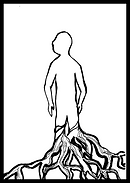
When I was young I was plagued by boredom and in an attempt to counteract the heavy spells of laying around the house, my friend Kathleen and I made a game called The Magic Box. Together we wrote down activities on scraps of paper and squished them into miniscule little balls. They went into the magic box. Then when boredom struck, we would produce four of the small promises and flick them down the hallway. The Ball that went the furthest was unfurled and the natural selection for what we should do next be it bake a cake, make a fort, or invent a language.
The quest for clarity that tarot provides is normally presented as a verbal exchange, an analysis of what the cards may mean. In my tarot practice I view the role of the interpreter in a similar way as my younger self with the Magic Box: making myself available to spontaneous invitations that the stimulus inspired. My deck was created with the availability to be interpreted in whatever way my body found meaning or inspiration.
The Arthaus two year pedagogy culminated in a festival at the end of July. I viewed this as my final chance to reap whatever I could from the wonderful community and space that Arthaus had been for me. The result was being involved in various performative pieces featured in the festival, but also the logistics of production, technical elements, and organisation. The chaotic period of the rehearsal and meetings was a perfect setting to use my tarot deck. What started as a personal practice I now offered to the festival process in whatever way it was inspired to do so. The results for interpretations of the cards during the festival process were vast and varied. My deck lent itself to many processes of which two are showcased here.
It is important to note that this process is not finished. My creation of the Tarot is not a finished product, but rather the construction of a vessel. Just like the Magic Box grew in its contents, the collection of stimuli (in this case the tarot cards) are not stagnant but a living tool. I embody the role of drawer and creator while also using the deck as an interpreter; a reactive and reflexive process.
Group Reading
The first time I invited another body into my tarot practice was outside our studio waiting for our turn in the space. I was working on creating some cards and the deck was requested for a standard 3 card reading. The reading was for friends although in a casual setting, felt like the perfect context to experiment. I continued to do readings for friends or others that were part of the Arthaus festival process. It benefitted me as the interpreter knowing my fellow colleagues so well from the two years of study together. Knowing the drawer in this case served me to offer an outside eye on what their present state looked like with all things considered, especially since many readings were done with the intention of bringing clarity specifically to the festival process. The process of reading became easier and more playful and eventually reached a performative context.
For each day of the festival an opening tarot ceremony brought the audience together for a three card reading. The first card was read as the past two years of journey that brought the performances to life, the second card represented the festival day itself and any sentiments or intentions for both audience and performers, and the third card was to represent the future of both the Arthaus graduates and the larger context of theatre. The tarot in this circumstance served as a medium that allowed audience and performer to inhabit the same space of mystery and union. A ritualized act of playfulness would start the day as an introduction to the madness of thirteen individual artists working together in the weeks prior and point towards the variety of work that would be seen throughout the program. Having an individualized deck allowed readings to be personal, intriguing, and not bound to the expectations of anyone practicing classical tarot. The tarot provided an act of spontaneity that denied a classical division of performers and audience, almost an icebreaker.
During the reading we would process how we were feeling about the piece or about the material of the piece itself.